
RotoGrinders Daily Fantasy
RotoGrindersSports
4.7908.00 Reviews
- Version
- 3.0.3
- Installs
- 50.00K
- Age Rating
- Mature 17+
Screenshots
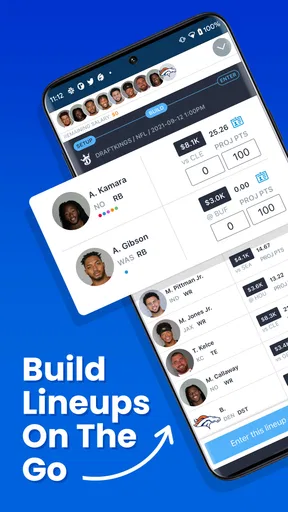
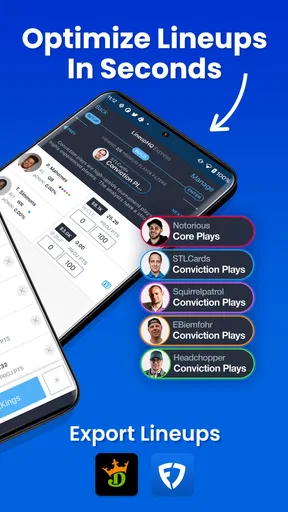
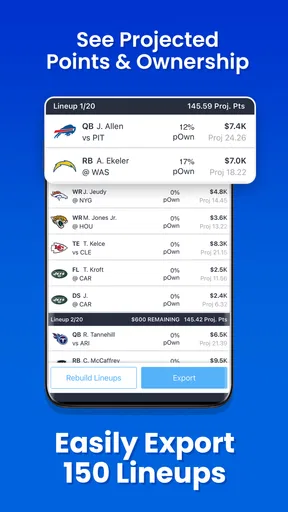
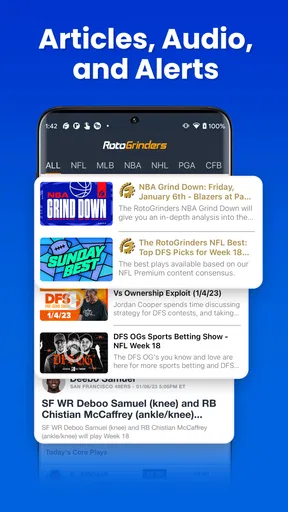
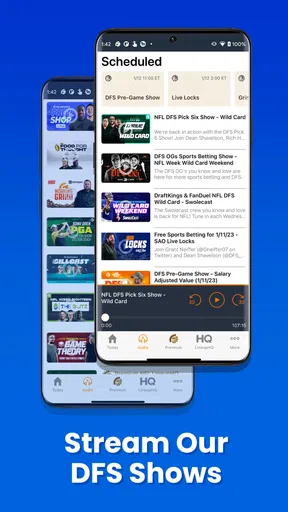
Our Review of RotoGrinders Daily Fantasy
 Analysis by Appyee
Before adding another fantasy tool to my phone, I ask a practical question: does it solve a problem I actually run into near contest time? RotoGrinders Daily Fantasy is most useful when that problem is checking who is expected to start. I see it as a focused roster companion, not a complete daily fantasy research platform. That distinction matters: a last-minute lineup change can make a carefully considered entry worth revisiting, but confirming a starter does not tell me whether that player is a smart pick.
My decision comes down to how I already play. If I research ahead, follow several teams, and make entries close to game time, a dedicated roster check can fit naturally into my routine. If I enter contests casually and rarely revisit my choices, the app’s narrower job may not justify another stop in the process. I would choose it for a specific need, not simply because more fantasy apps must mean better decisions.
Questions I would settle before installing
I would first consider whether I need a place to check starting rosters or a full workspace for research and lineup construction. I would also think about how much time I spend following late news, whether I can evaluate a replacement without rushing, and whether I am comfortable keeping a separate tool in my contest routine. Those answers matter more than the appeal of a quick download.
RotoGrinders, the developer, has made this a free Sports app, with optional in-app purchases ranging from $9.99 to $119.99 per item. That makes it easy to try the basic experience, but I would check what any paid option offers before spending. The app is rated Mature 17+, so it is not something I would assume is suitable for younger fantasy fans just because its subject is sports.
What the app does well when lineups are changing
The central strength is timing. A player can appear attractive in a fantasy contest and then lose value when a coach announces a late change. In my experience, the practical benefit of a lineup app is not that it tells me how to win; it helps me avoid acting on information that has already become outdated. That distinction matters. The app is most useful during the short window between initial lineup research and a contest’s lock time.
I like the idea of using it as a final verification step. I can do my broader research elsewhere, form a shortlist, and then check the relevant starting-roster information before submitting an entry. This separates two tasks that are often mixed together: deciding which players I prefer and confirming whether those players are actually expected to start. That workflow is more efficient than repeatedly searching social feeds, team pages, and general sports news while a deadline approaches.
A realistic example would be a busy evening when I have already prepared a few entries during a lunch break. Instead of rebuilding everything from scratch, I can open the app shortly before the contests close and review the latest roster situation for the players I selected. If one of them is no longer starting, I have a clear reason to revisit that position. The app does not remove the decision from me, but it gives that final check a more direct purpose.
The strongest reason to use it is simple: it reduces the chance of overlooking a starting-lineup change at the worst possible moment. That is a modest promise compared with an all-in-one fantasy suite, but it is also easier to understand and easier to fit into an existing routine.
A useful last-minute workflow
I would not open this app randomly throughout the day without a plan. A better routine is to begin with my contest rules and research, note the players whose status could affect my entries, and then use the app as the last checkpoint. This keeps the tool from becoming a distraction. It also helps me focus on actionable information instead of endlessly refreshing every possible matchup.
For multi-entry players, that final check can be especially helpful. A single change may affect several lineups, so checking roster news before submission can prevent the same mistake from being repeated across an entire set of entries. I would still review each affected lineup independently, because a replacement player may alter salary balance, positional structure, or the overall strategy. The app can flag the need for attention, but it cannot make those fantasy choices for me.
Another practical use is separating confirmed starters from assumptions based on previous games. A player who started recently is not automatically a safe choice today. I find that a dedicated roster-focused tool encourages a more disciplined question: “Is this player expected to start now?” That is more useful than relying on memory or an old lineup screenshot.
Where it fits beside other fantasy tools
Compared with a general sports news app, this app has a clearer fantasy purpose. A news feed may provide more context, interviews, injury discussion, and broader coverage, but it can also bury a lineup update among unrelated stories. A dedicated roster-checking tool is less expansive, yet potentially faster when the only question is whether a player is in the starting group.
Compared with a full daily fantasy research service, the trade-off is even clearer. A larger platform may combine projections, matchup analysis, salary tools, ownership estimates, lineup builders, and contest strategy. That broader environment is better for someone who wants to do nearly everything in one place. RotoGrinders Daily Fantasy makes more sense for someone who already has those habits or tools and wants a focused way to stay aware of starting rosters.
I also would not treat it as a replacement for official team announcements or league information. When a decision has major financial consequences, I prefer to cross-check important news through a reliable primary source. The app can be part of that process, but a focused convenience tool should not become my only authority for every late-breaking decision.
A small habit that makes the check more useful
I would make a short list of the players whose starting status could genuinely change my entries, rather than checking every roster just because I can. That helps distinguish a meaningful update from background noise. It also makes the final review faster: I know what I am looking for and can spend the remaining time thinking through the fantasy consequences instead of scrolling without a question in mind.
For someone juggling work, family plans, or a commute, this matters more than it might seem. A focused check can fit into a brief pause before a contest closes, while a broad research session may not. Still, I would avoid making a consequential change while distracted. The app can make information easier to consult; it cannot create the time or attention needed to evaluate what that information means.
Limitations, audience fit, and my verdict
I’d use this section to weigh the app’s focused roster checks against the limits of relying on a single tool near contest time. It also helps clarify which players are likely to benefit from adding it to their routine—and why a broader fantasy resource may be a better fit for some.
The narrow focus is also the main weakness
The same specialization that makes the app easy to understand can make it feel limited. If I want detailed player evaluation, contest selection advice, historical trends, or a complete lineup-building workspace, I need something beyond this app. It helps answer a specific roster question, but it does not turn that answer into a finished fantasy strategy.
That means new daily fantasy players may find the experience incomplete. Someone who is still learning salary rules, scoring formats, positional requirements, and bankroll discipline needs educational guidance and broader analysis. A lineup update alone does not explain whether a player is a good play, whether a replacement has enough opportunity, or whether a contest is worth entering. Beginners may be better served by a more comprehensive fantasy platform first, then add this app once late lineup news becomes part of their routine.
There is also a behavioral risk. Fast updates can encourage rushed decisions. If I see that one player is out, the obvious replacement is not automatically the best replacement. I may need to reconsider the entire lineup rather than make a quick one-for-one swap. The app is helpful when it supports careful checking; it is less helpful when it becomes an excuse to make impulsive changes just before lock.
The free download lowers the barrier to trying it, but the presence of in-app purchases means I would pay attention to which parts of the experience require extra spending before building my regular workflow around them. The listed purchase range runs from $9.99 to $119.99 per item, so the app is not simply a no-cost commitment in every respect. I would start with the basic experience and decide whether any paid option solves a problem I genuinely have, rather than assuming more access automatically improves my results.
Who should use it every contest day?
I see the best fit in experienced daily fantasy players who already have a research process. These users know what information they need, understand the importance of confirmed starters, and can act on a late change without confusing news with analysis. The app can serve as a compact checkpoint between research and submission.
It may also suit a player who follows several contests and finds general sports apps too noisy. When I am tracking multiple games, a focused roster tool can reduce the mental effort of remembering which teams still need checking. That is a practical advantage even when the app itself does not provide the deeper context needed for the final decision.
I would be more cautious recommending it to casual players who enter a contest once in a while, people who never adjust lineups near game time, and users looking for a single app that handles projections, research, lineup construction, and contest management. For those audiences, the narrow scope may not justify adding another tool. A broader fantasy service or a familiar sports app may be more convenient, even if it is less focused on starting rosters.
What changes when I move it into my routine
Switching from scattered news checks to a dedicated roster step is not difficult, but I would not expect it to replace my existing research or contest setup. At first, I would keep my usual sources and compare the roster information I need before relying on a new routine. Once I know where this tool fits, I can use it for the specific check it handles rather than duplicating every task across several apps.
That distinction also answers a common practical concern: I would not install it expecting automatic lineup recommendations. My process would remain mine. The app may help me notice that an assumption needs review, while I still decide whether to change a player, restructure an entry, or leave it alone. If I want the app to make those judgment calls for me, a roster-focused companion is the wrong category of tool.
Device and account expectations
The app is available for Android users running version 5.0 or later, which covers older devices as well as more recent ones. Its current version is 3.0.3. I would still keep expectations realistic: compatibility does not guarantee that every older phone will feel equally comfortable during a fast-moving pregame period. Screen clarity, notification habits, and how quickly I can move between the app and my fantasy contest all affect the experience.
Its Mature 17+ content rating is another point parents and younger users should notice before installing. This is a sports-focused fantasy tool, not a general family sports scoreboard. I would also remember that the app is free to install but includes optional purchases, so I would review the purchase prompts carefully and avoid treating paid access as necessary unless it clearly fits my use.
How I would use it without overrelying on it
My preferred method would be straightforward. I would prepare my entries using my normal research, mark the players whose starting status matters, check the app before the relevant contest deadline, and then confirm any major change through another trustworthy source. After that, I would reassess the affected lineup rather than automatically inserting the first available replacement.
I would also use a personal cutoff. Constant checking can create noise, especially when there is no meaningful update. A deliberate review shortly before lock is more useful than opening the app every few minutes. This approach preserves the app’s main advantage—timely roster awareness—without allowing it to dominate the entire fantasy process.
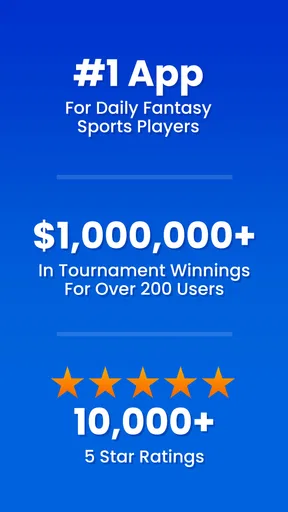
The app has passed 50 thousand installs and holds a 4.7 average from around 3.4 thousand ratings. It has also received 908 written reviews, giving prospective users more than a star score to consider. I would treat that reception as encouraging, not as proof that it will match every player’s workflow.
After using it as a focused roster companion, my verdict is positive but specific. RotoGrinders Daily Fantasy is worthwhile when the problem I need to solve is staying aware of starting-lineup changes before a contest begins. It is less convincing as a complete daily fantasy command center, because its value depends on me bringing the analysis, contest knowledge, and discipline myself.
I would recommend trying it if late news regularly affects my entries or if I want a cleaner alternative to hunting through general sports feeds. I would skip it if I rarely play, never make late adjustments, or expect one app to provide every part of the fantasy decision. For the right player, it is a useful final checkpoint—not a magic lineup generator—and that honest limitation is exactly how I would judge its value.
Verdict
Strengths of RotoGrinders Daily Fantasy
- Detailed projections and lineup tools for major DFS sports
- Helpful contest analysis for improving tournament selection
- News and injury updates support last-minute lineup changes
- Covers multiple daily fantasy platforms in one app
- Useful filters make player research faster and more focused
Limitations of RotoGrinders Daily Fantasy
- Many advanced tools require a paid subscription
- The interface can feel crowded for first-time DFS users
- Some features depend on timely data and may update slowly
- Best value is limited if you only play DFS occasionally
- Requires an account to access much of the app’s content
Similar Picks in This Category
View All
BeSoccer: Soccer Live Score
BeSoccer apps4.3

Cricbuzz - Live Cricket Scores
Cricbuzz.com3.7

NFL
NFL Enterprises LLC2.4

Da Fit
MO YOUNG LIMITED3.6

ESPN
Disney4.5

LiveScore: Live Sports Scores
LiveScore Limited4.5
Frequently Asked Questions
What is RotoGrinders Daily Fantasy, and what can I use it for?
RotoGrinders Daily Fantasy is designed to help daily fantasy sports players research contests, compare player information, follow expert analysis, and make more informed lineup decisions. It is primarily a research and strategy companion rather than a guaranteed winning tool. Depending on the current version and region, available sports, contest information, and platform integrations may vary.
Does RotoGrinders Daily Fantasy let me create and enter contests directly?
The app’s main purpose is generally to provide daily fantasy sports news, projections, tools, rankings, and strategy content, while contest entry may depend on the supported fantasy operators and available integrations. Before downloading, check the current app description and permissions to confirm whether you can enter contests inside the app or whether you will be redirected to a separate fantasy sports platform.
Which sports and fantasy platforms are supported?
RotoGrinders is known for covering popular daily fantasy sports such as football, basketball, baseball, hockey, golf, and other competitions, although coverage can change throughout the year. Support for specific operators, contests, tools, and regions may also differ. Users should verify the latest listings, supported leagues, and availability in their country before relying on the app.
Is RotoGrinders Daily Fantasy free to download and use?
The application may offer free access to selected articles, news, tools, or basic fantasy information, while some advanced features, projections, premium content, or subscriptions can require payment. Pricing and included benefits may change over time. Review the in-app purchase details carefully before subscribing, especially if you only need occasional lineup research or general fantasy advice.
Can RotoGrinders Daily Fantasy guarantee that I will win money?
No fantasy sports app or analysis service can guarantee winnings. RotoGrinders Daily Fantasy can help organize research and provide statistical information, expert opinions, and strategy resources, but results still depend on player performance, contest selection, injuries, competition, and chance. Users should play responsibly, follow local laws and age requirements, and never spend more than they can afford to lose.
